Ahh McLean, you've done it again!
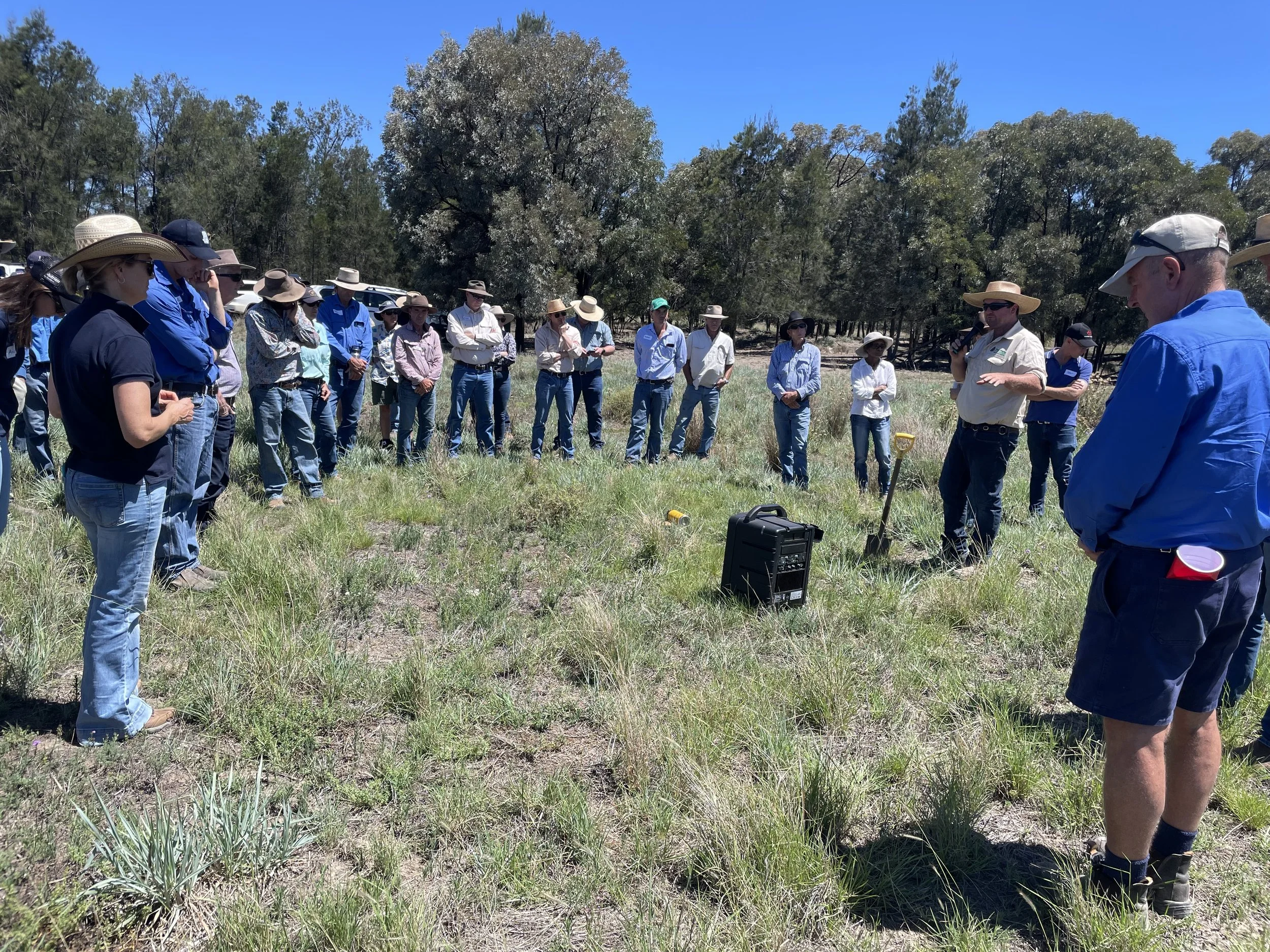
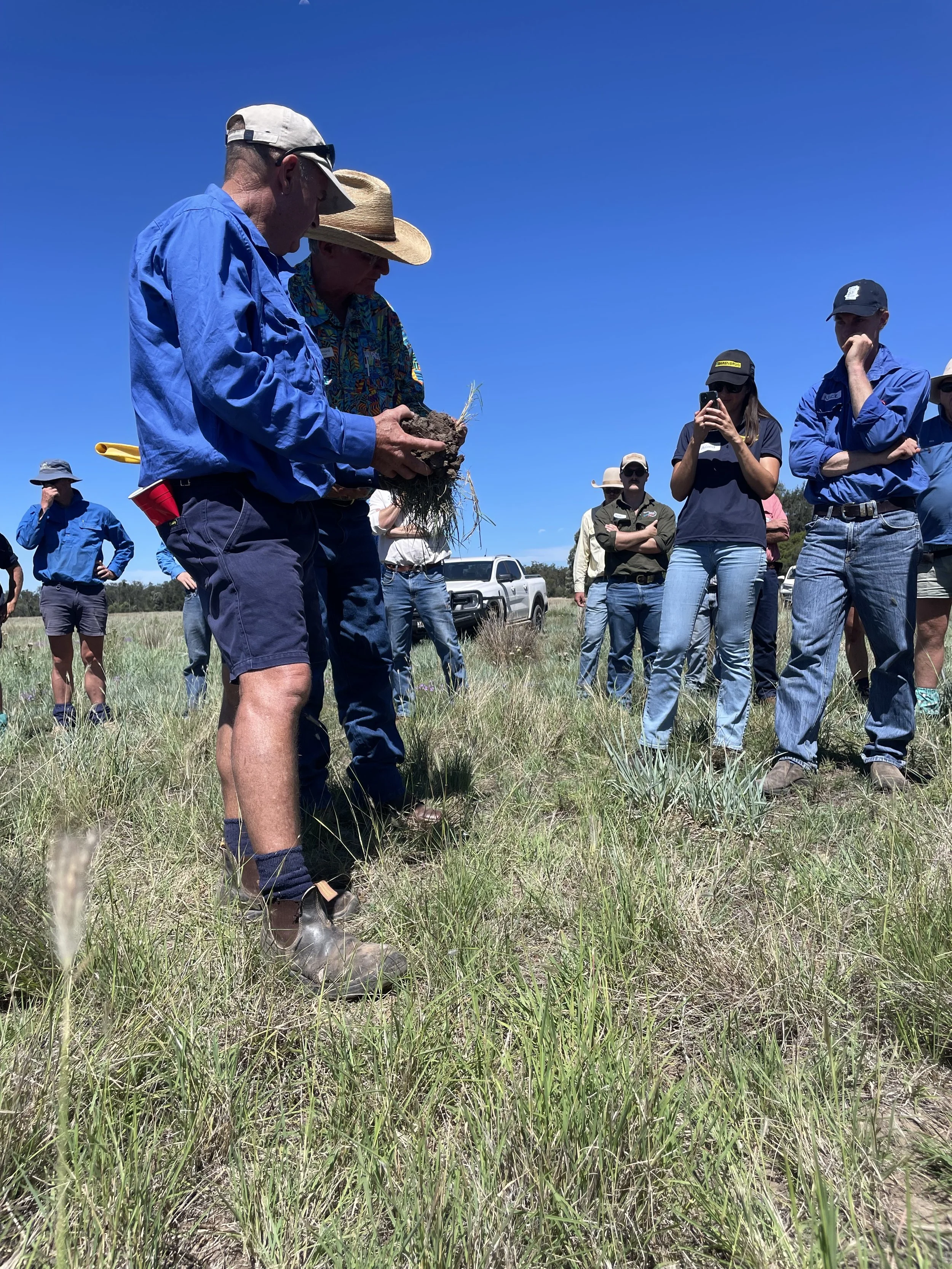
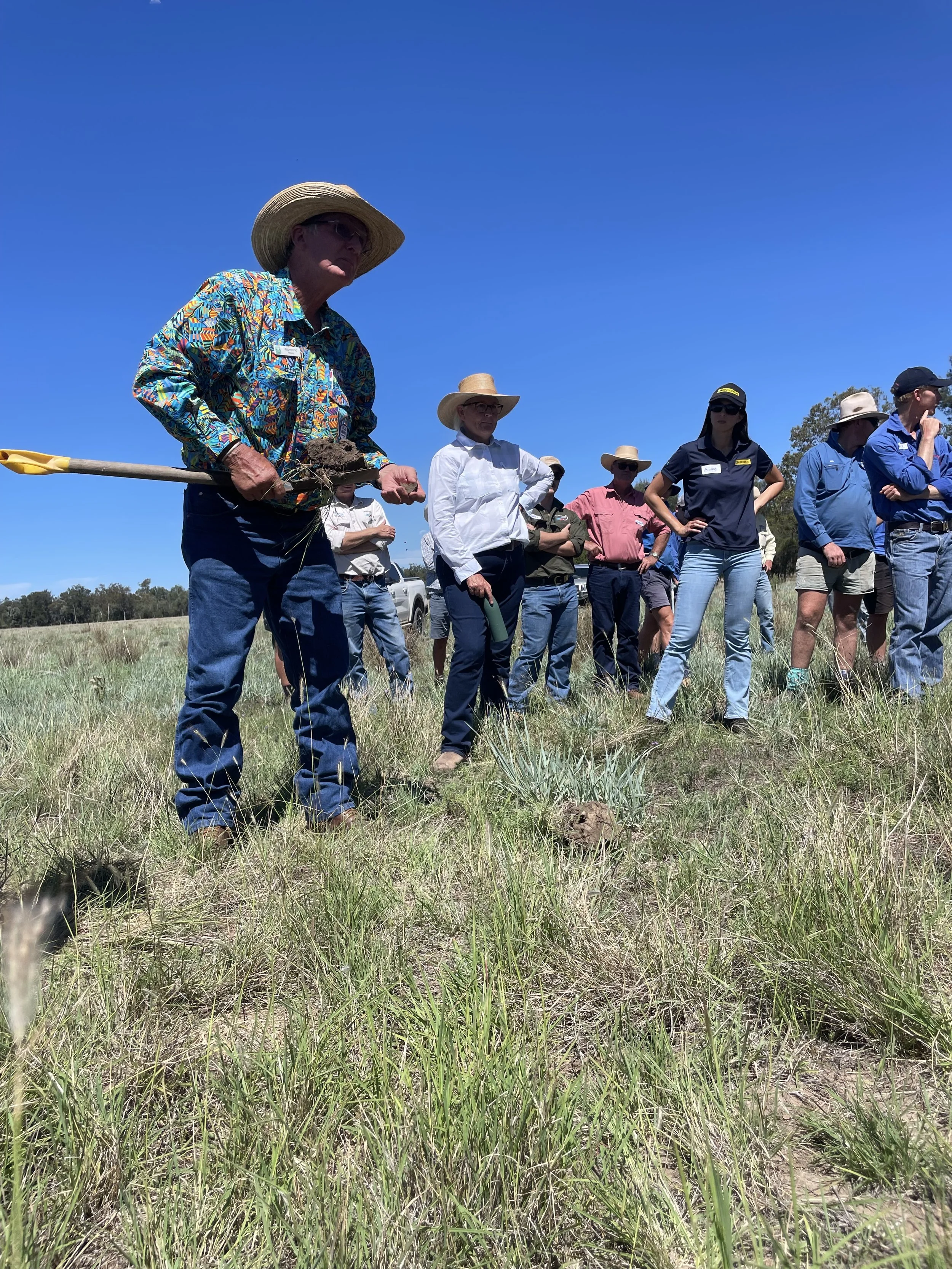
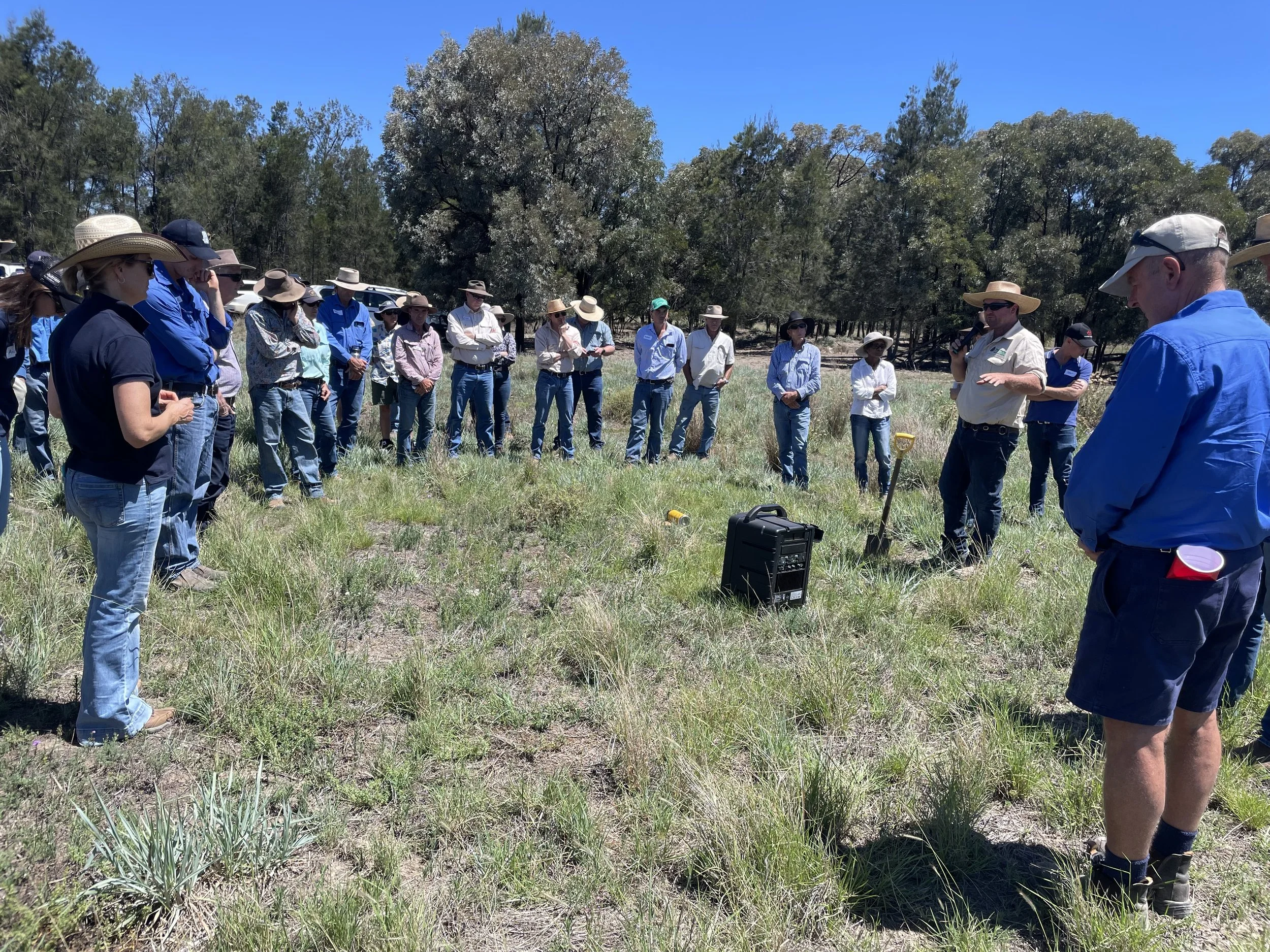
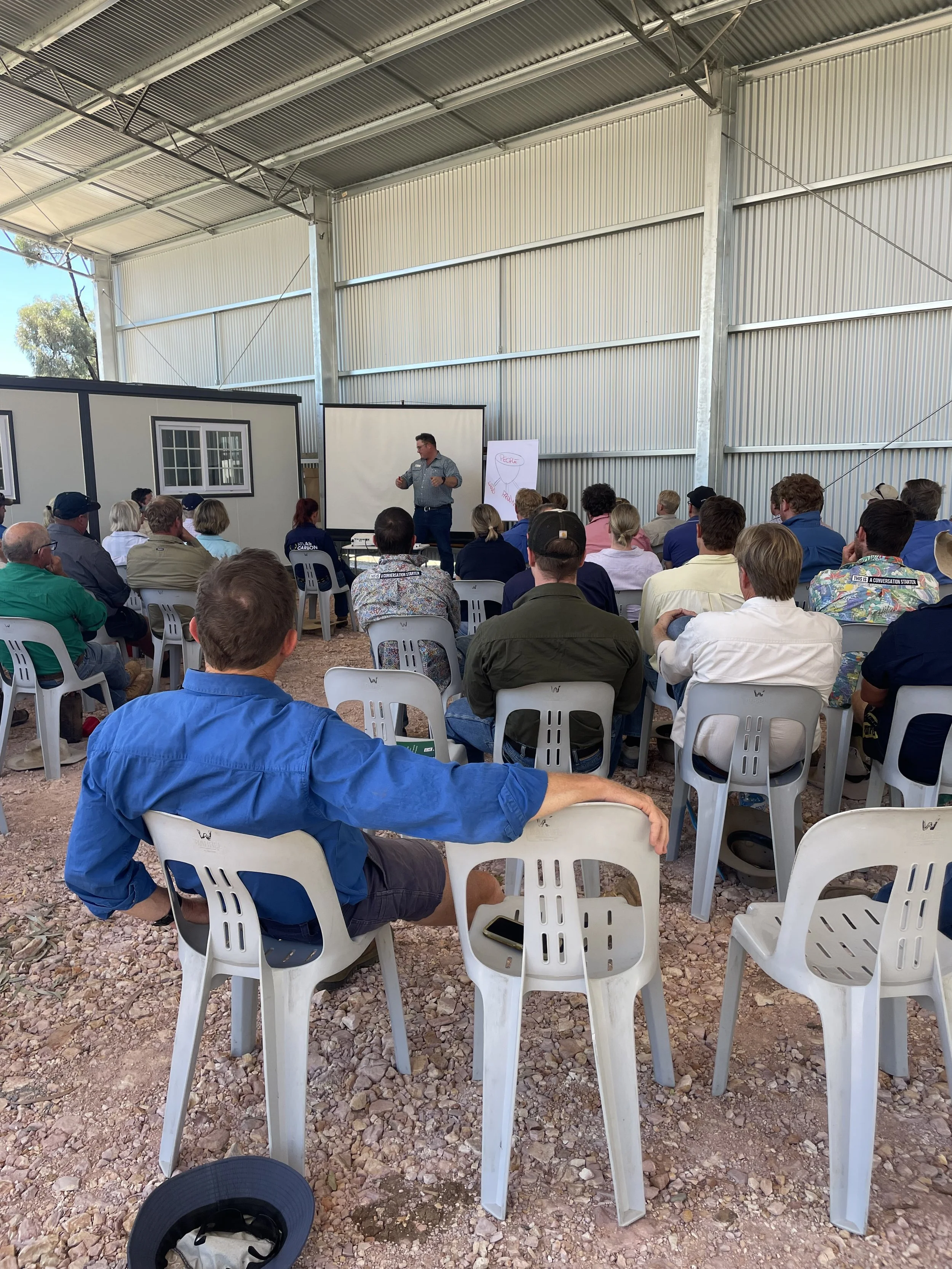
In November 2025, we headed to Bonyi Grazing for a field day with David McLean from RCS Consulting Services.
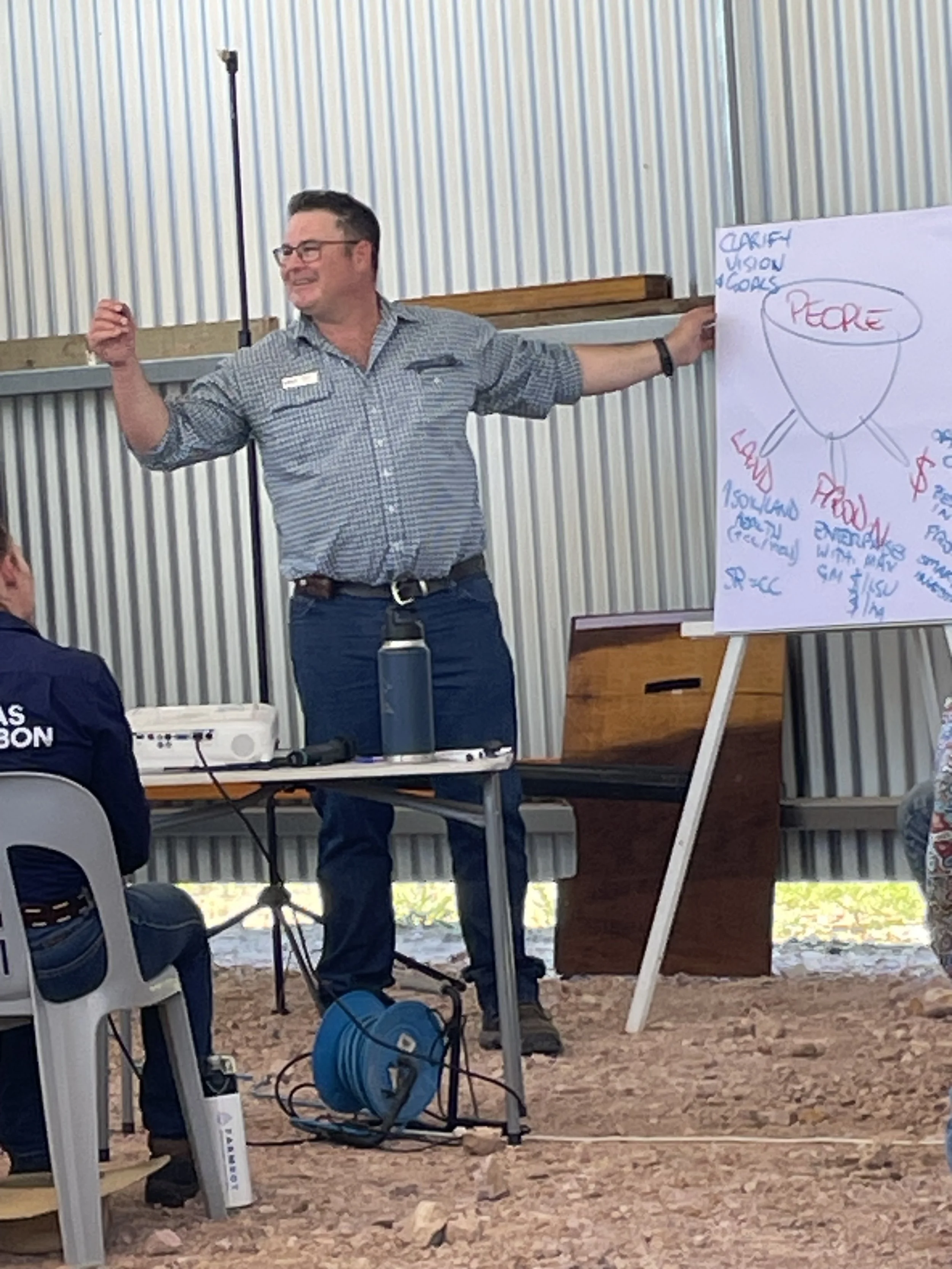
David challenged attendees to refocus on what really drives a successful business. One of the key concepts discussed was the well-known RCS "three-legged pot" framework, which illustrates the four essential components of a successful farming enterprise.
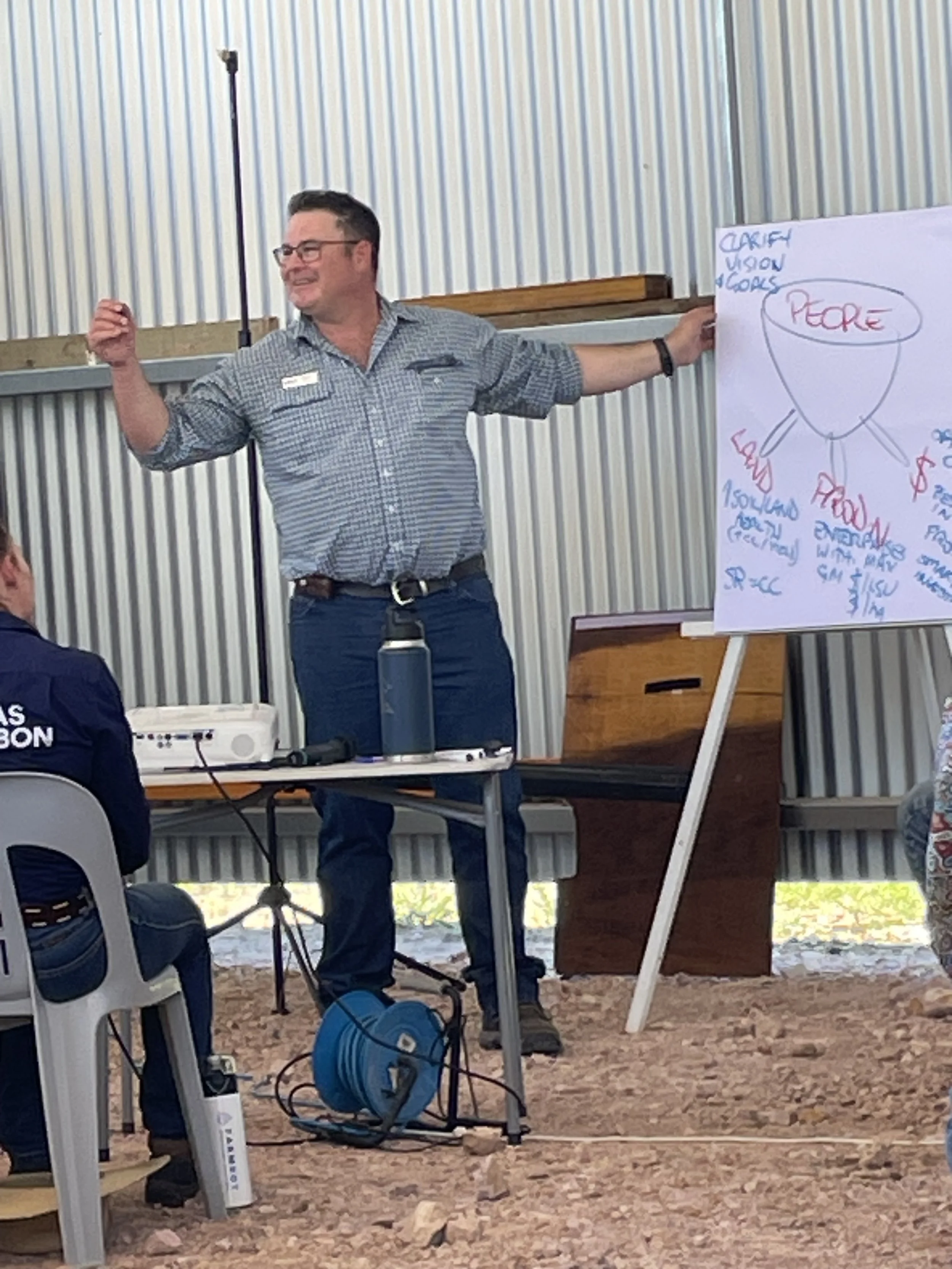
The three legs of the pot represent:
· Land Management – the foundation of any farming operation. This focuses on soil health, water cycles and biodiversity, with the aim of regenerating the landscape and maintaining long-term productivity.
· Production – the outputs of the agricultural system, whether that be cattle, sheep or crops. This includes genetics, grazing management and stocking rates, with a focus on producing quality outcomes without placing excessive pressure on the land.
· Business Management – the financial leg of the business, covering cash flow, operating costs, marketing and long-term planning.
Sitting inside the pot is the fourth component:
· People Management – because no business succeeds without people. This includes family relationships, staff leadership and ongoing skills development.
If any one of the three legs becomes weak or unbalanced, the pot begins to tip, ultimately putting both the people and the profitability of the business at risk.
David also explored the Nine Seductive Illusions of Agriculture. One of the most common is the belief that increasing production should always be the goal. However, more production does not automatically translate to more profit.
What is that extra production costing you? Is it reducing your profit margin? Taking time away from your family? Or diverting resources from another area of the business that delivers a better return?
Between David's business rationalisation discussions, we also heard from our fantastic hosts, Todd, John, Ray and Viv Cranney.
The Cranneys are among the most innovative landholders in the Goondiwindi region. Bonyi Grazing was one of the first properties in the area to establish a Wagyu herd, and they continue to push the boundaries through their artificial insemination program, carefully selecting genetics to achieve their breeding objectives.
As early adopters of the RCS management approach, the Cranneys were the perfect fit to host David McLean and demonstrate these principles in practice.
One of the highlights of the day was the field walk, where Todd took attendees to a paddock affected by pasture dieback. Pasture dieback has proven difficult to manage across parts of Queensland, with researchers still working to better understand its causes.
Todd used the opportunity to ask David and the collective "brains trust" of attendees how they would approach the issue. It sparked valuable discussion and highlighted how quickly people can move away from focusing on the "biggest levers" identified earlier in the day when faced with a challenging problem.
Biggest levers are the actions that can create the greatest impact with the least amount of input.
A big thank you to David McLean and to Todd, John, Ray and Viv Cranney for hosting such an insightful and engaging field day.
This project is funded by Queensland Government’s Natural Resources Recovery Program.