Natural Sequence Farming with Jack Groat
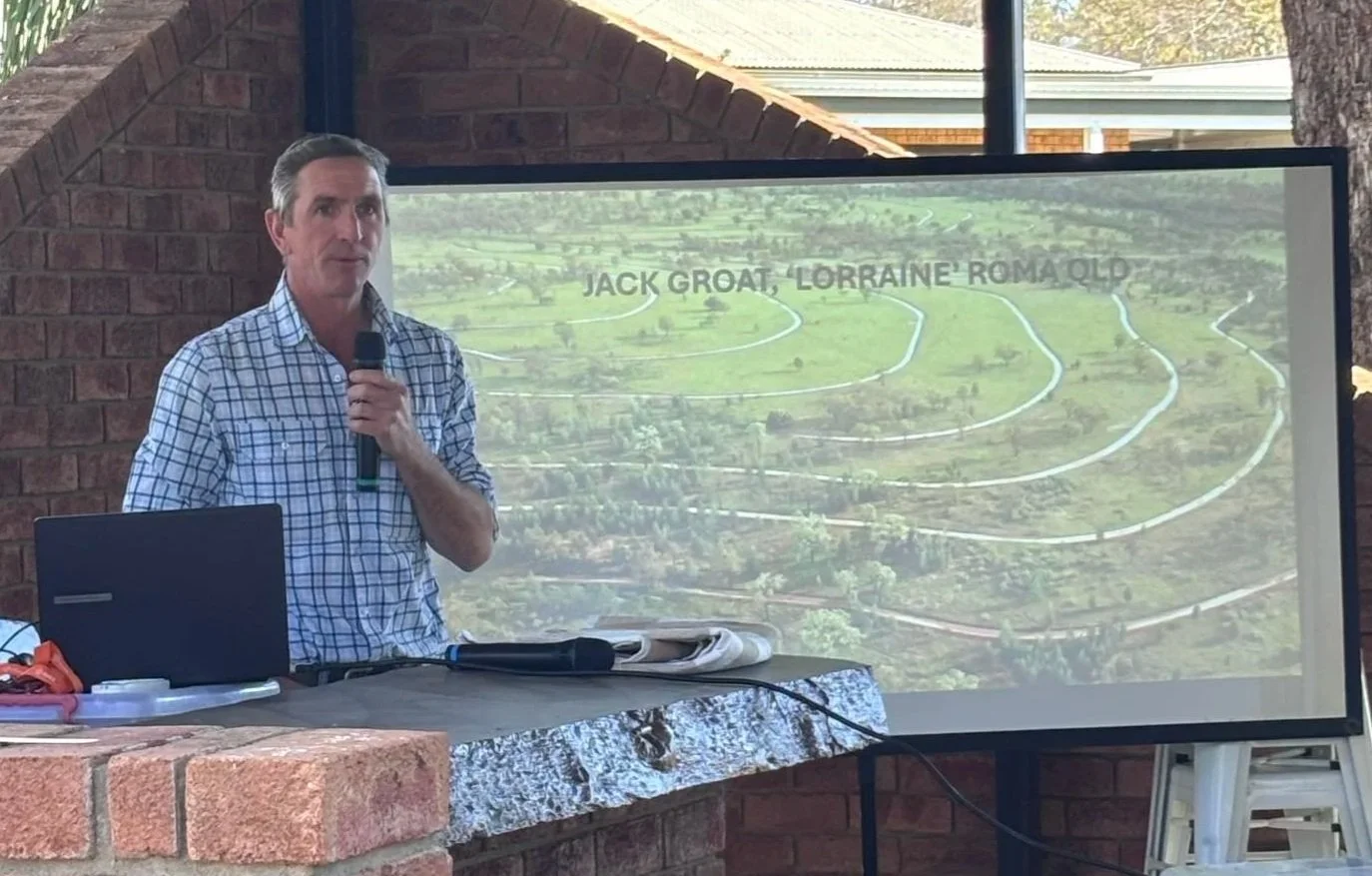
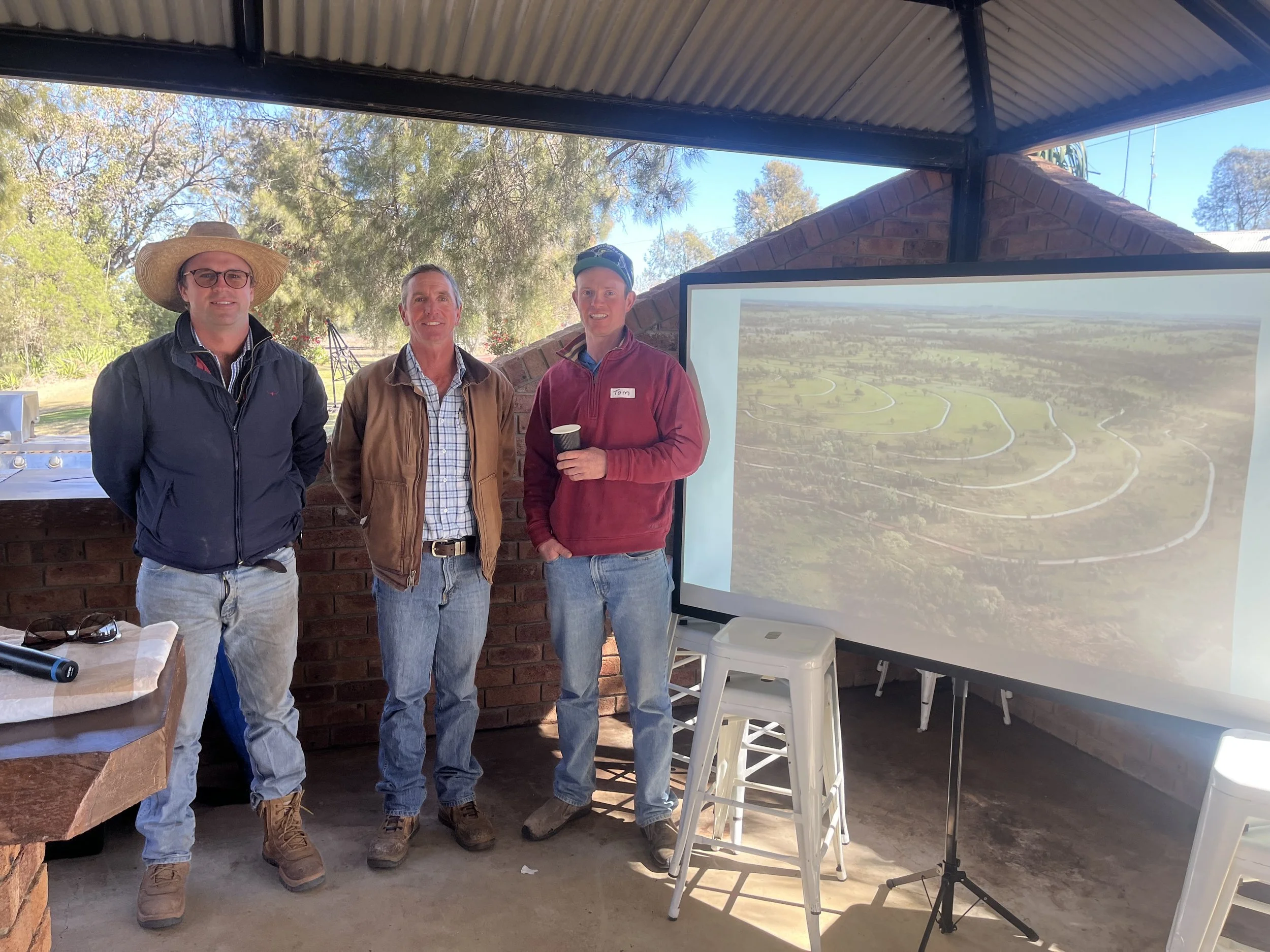
During the Macintyre Ag Alliance July 2026 Field Day at the Coggan family’s property, Ennara, members and guests had the opportunity to hear from Jack Groat of Lorraine, near Roma, who shared his experiences and learnings from the Lachlan Hughes Foundation Tree of Life Award Scholarship. The scholarship enabled Jack to further investigate Natural Sequence Farming and explore how working with natural processes could improve the resilience and productivity of his property.
Having grown up in the Arcadia Valley between Injune and Rolleston, Jack said purchasing Lorraine in 2015 presented an entirely new set of challenges. After spending several years getting to know the property, a run of difficult seasons highlighted the limitations of the landscape. Jack recognised that there simply wasn’t enough biomass in the soil to effectively capture and utilise rainfall.
After watching a presentation by Peter Andrews, Jack began experimenting with ways to slow the movement of water across his property. His interest led to further learning, including completing the RCS Grazing for Profit program, where he developed a deeper understanding of how working with the contours of the landscape could improve water infiltration, soil health and plant productivity, while also helping to restore the function of natural waterways.
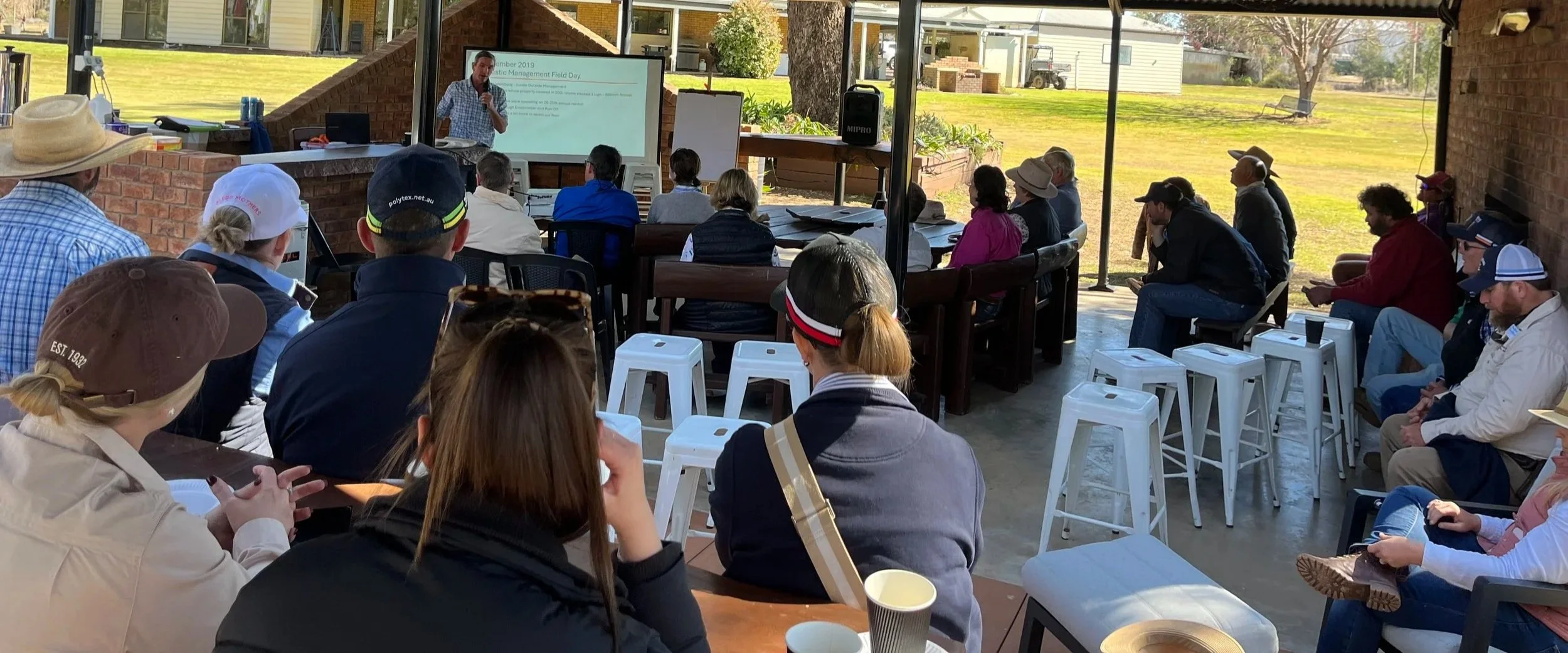
Jack spoke passionately about the importance of working with natural processes rather than against them, with a focus on building a more resilient landscape. Importantly, he didn’t present himself as an expert, but instead openly shared his experiences, including both the successes and the mistakes he has made along the way. His practical and honest approach was refreshing and provided valuable insights for everyone in attendance.
We thank Jack for taking the time to share his journey, knowledge and experiences with the Macintyre Ag Alliance. His insightful and thought-provoking presentation gave members plenty to consider and demonstrated the value of continuing to learn, trial new ideas and look at our farming landscapes through a different lens.
This project is made possible through funding from the Queensland Government’s Natural Resources Recovery Program.